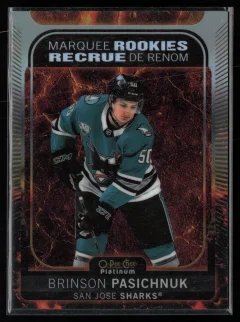
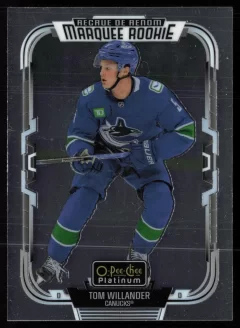
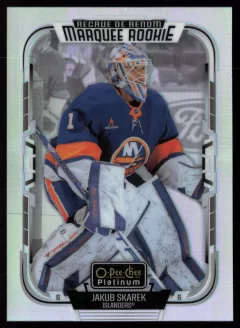
Sports card flipping — buying cards at one price and selling them at a higher price — has become a legitimate side hustle for thousands of collectors across Canada. Whether you're looking to fund your personal collection or build a full-time card business, flipping offers real income potential if you approach it with discipline and knowledge. This guide covers everything Canadian collectors need to know about flipping sports cards for profit in 2026, from sourcing strategies to platform fees to realistic income expectations.
What Is Sports Card Flipping?
Sports card flipping is the practice of buying trading cards with the intention of selling them relatively quickly for a profit. Unlike long-term investing, where you hold cards for years hoping they appreciate, flipping is about identifying undervalued cards and selling them at market price within days, weeks, or months. The profit comes from the spread between your buy price and sell price, minus all costs.
There are two main approaches to flipping:
- Raw flipping — Buy undervalued raw (ungraded) cards and resell them quickly without grading. Faster turnaround, lower upfront costs, but smaller margins.
- Grading flips — Buy raw cards in high condition, submit them for grading (PSA, BGS, SGC), and sell the graded cards at a premium. Slower turnaround, higher upfront costs, but potentially much larger margins.
Market conditions in 2026 favor raw flipping for speed and grading flips for margin. High grading costs and extended turnaround times at PSA and BGS make raw flipping more attractive for quick capital turnover, while grading flips remain the path to the highest per-card profits.
Realistic Income Expectations
Let's be honest about what card flipping can earn. A part-time seller who sources well and tracks every cost can realistically clear $300-$1,200 per month at 5-12 hours per week. Full-time flippers with established sourcing channels and efficient operations can earn $2,000-$5,000+ per month, but this requires significant capital, time, and expertise.
The number that determines whether you hit those ranges is never the buy price — it's the net after platform fees, shipping, supplies, and the time your cash sits in inventory. A card bought for $10 and sold for $20 does not produce $10 of profit. Here's a realistic example:
- Buy price: $18
- Sale price: $32
- eBay fees (13%): -$4.16
- Payment processing (3%): -$0.96
- Shipping (bubble mailer + postage): -$3.50
- Supplies (sleeve, top loader, team bag): -$0.50
- Net profit: $4.88
That's a 27% margin on a $18 investment — decent, but not the $14 profit a beginner might expect. Understanding this math is the difference between profitable flipping and slowly losing money.
How to Source Cards for Flipping
1. eBay Auction Sniping
eBay auctions are the #1 sourcing channel for card flippers. Many sellers list cards with poor titles, blurry photos, or ending at inconvenient times — all of which suppress the final price. Use tools like 130point.com and eBay's saved search alerts to track comps, then bid on undervalued auctions.
Tips for eBay sourcing:
- Search for misspelled player names (though eBay's auto-correct has reduced this opportunity)
- Look for auctions ending between 2-6 AM EST when competition is lowest
- Find listings with poor photos — fewer bidders means lower prices
- Search "buy it now" listings for underpriced cards (use 130point's sold data to compare)
- Buy lots and sell individual cards — bulk lots often have cards worth more sold separately
2. Facebook Marketplace and Kijiji
For Canadian flippers, Facebook Marketplace and Kijiji are goldmines for local deals. Many non-collectors inherit card collections and sell them below market value. Search for "hockey cards," "sports cards," or "card collection" in your area. Always meet in public places and bring cash for negotiations.
3. Card Shows
Canadian card shows are excellent for sourcing. Dealers often have inventory priced below online market values, and you can negotiate bulk deals. The Sport Card Expo in Mississauga (April and November), Calgary (September), and Edmonton (April) are the largest shows. Local monthly shows in most Canadian cities also offer sourcing opportunities.
At shows, focus on:
- Dollar bins and discount boxes — look for stars and rookies priced below comps
- Graded cards in dealer cases — compare to eBay sold prices on your phone
- Raw cards with high grading potential — check centering and corners carefully
- End-of-day deals — dealers prefer to sell than pack up inventory
4. Group Breaks
Participating in group breaks can yield cards worth reselling. If you get a premium hit from a Random Team spot, you can often sell it for more than the spot cost. This is higher risk than other sourcing methods, but the upside can be significant.
5. Retail Stores
Walmart, Canadian Tire, and other retailers carry blaster boxes and mega boxes. While the hit rate is lower than hobby boxes, retail products sometimes contain exclusive parallels that sell well. The key is knowing which retail exclusives have value before buying.
Grading Flips: The High-Margin Strategy
Grading flips are where the real money is in card flipping. The concept is simple: buy a raw card in high condition, submit it for grading, and sell the graded card at a premium. The PSA 10 premium alone can turn a $50 raw card into a $400 graded card.
The Grading Flip Math
Here's a realistic example of a grading flip:
- Buy raw card: $50 (a star rookie in what appears to be gem mint condition)
- PSA grading cost: $35 (bulk service, 65-day turnaround)
- Shipping to PSA: $8
- Return shipping from PSA: $12
- Supplies: $2
- Total investment: $107
If the card grades PSA 10 and sells for $400:
- Sale price: $400
- eBay fees: -$52
- Payment processing: -$12
- Shipping: -$5
- Net: $331
- Profit: $224 (209% ROI)
If the card grades PSA 9 and sells for $120:
- Sale price: $120
- eBay fees: -$15.60
- Payment processing: -$3.60
- Shipping: -$5
- Net: $95.80
- Profit: -$11.20 (LOSS)
This illustrates the key risk of grading flips: the grade determines everything. A PSA 10 is highly profitable; a PSA 9 can be a loss. Your ability to evaluate card condition before buying is the single most important skill for grading flips.
Which Cards to Grade
Not every card is worth grading. Focus on:
- Rookie cards of star players — The grading premium is largest for rookies of established stars and hyped prospects
- Cards with a significant PSA 9 to PSA 10 gap — If a PSA 9 sells for $50 and a PSA 10 for $400, the grading flip has huge upside
- Low-population cards — Cards with few graded examples have less competition and more price stability
- Vintage cards in high grade — Older cards in excellent condition command massive grading premiums
Avoid grading:
- Common base cards — grading fees exceed the card value
- Cards with obvious condition issues — they won't grade high enough to justify the cost
- Cards with no PSA 9 to PSA 10 price gap — if the premium is small, the flip doesn't work
Where to Sell Flipped Cards
eBay
eBay is the largest sports card marketplace and the correct platform for roughly 80% of individual card sales. It handles raw cards, graded slabs, and cards from every era with a buyer pool no other platform matches. eBay charges approximately 13% in fees for card sales. Use eBay's authentication service for cards sold over $750 to increase buyer confidence.
WhatNot
WhatNot is a live-selling platform that has exploded in popularity. You host live streams where viewers bid on cards in real time. Sell-through is fast, but fees and the time commitment of hosting shows should be factored in. WhatNot is best for sellers comfortable presenting live with enough inventory to fill a show.
COMC (Check Out My Cards)
COMC is a consignment platform where you mail in cards and they handle listing, storage, and shipping. It's ideal for searchable long-tail inventory you don't want to list one by one. However, COMC layers processing, storage, and cash-out costs, and the cash cycle is slower than eBay.
Card Source Canada
If you're looking to sell cards quickly without the hassle of individual listings, Card Source Canada offers consignment options for Canadian collectors. We handle the listing, marketing, and shipping, making it a hands-off option for flippers with volume.
Facebook Groups and Discord
Direct sales through Facebook groups and Discord servers avoid platform fees entirely. Many Canadian collector groups have active buy/sell/trade sections. The downside is smaller reach and no buyer protection, which can lead to disputes.
Platform Fee Comparison
| Platform | Fees | Best For | Cash Speed |
|---|---|---|---|
| eBay | ~13% + 3% processing | Individual card sales | Fast (1-3 days after sale) |
| WhatNot | ~8% + processing | Live selling, bulk lots | Fast (after show) |
| COMC | Processing + storage + cash-out | Long-tail inventory | Slow (weeks to months) |
| Facebook/Discord | 0% (but no protection) | Direct sales, trades | Instant (if local) |
Risk Management for Card Flippers
1. Diversify Across Sports
Don't put all your capital into one sport. Hockey, basketball, baseball, and football markets move independently. Diversifying protects you if one sport's market cools.
2. Keep Individual Purchases Conservative
Never put more than 10-15% of your flipping capital into a single card. If that card doesn't sell or drops in value, you need to have capital in other inventory to stay afloat.
3. Track Every Cost
Maintain a spreadsheet tracking every purchase, sale, fee, shipping cost, and supply expense. Without accurate cost tracking, you can't know your true profit margin. Many flippers who think they're profitable are actually losing money when all costs are accounted for.
4. Conduct Due Diligence
Before buying any card for flipping, check recent sold comps on eBay and 130point. Don't rely on asking prices — only sold prices reflect real market value. Walk away from deals when the pricing exceeds recent sold comps.
5. Factor in Time
Your time has value. If you spend 10 hours sourcing, photographing, listing, and shipping cards for $100 in profit, you're earning $10/hour. Track your hours and evaluate whether your flipping activity is worth the time investment.
Tax Considerations for Canadian Card Flippers
If you're flipping cards regularly and generating profit, the CRA may consider this a business activity rather than a hobby. Key considerations:
- Hobby vs. business: If you're buying with the primary intention of reselling for profit, the CRA likely considers it a business. Hobby collectors who occasionally sell duplicates are treated differently.
- Income reporting: Business income from card flipping must be reported on your tax return. Keep records of all purchases and sales.
- Expenses: You can deduct legitimate business expenses including card purchases, shipping, supplies, grading fees, and platform fees.
- HST/GST: If your annual revenue exceeds $30,000, you may need to register for HST/GST.
- Consult a professional: This guide is not tax advice. Consult a Canadian tax professional for guidance specific to your situation.
Building a Sustainable Flipping Business
The most successful card flippers treat it like a business, not a hobby. Here's how to build sustainability:
- Start with $200-$500 capital — Don't risk money you can't afford to lose. Start small and reinvest profits.
- Specialize in one sport or era — Deep knowledge of one niche beats shallow knowledge of many. Become the expert in, say, modern hockey rookies or 90s basketball.
- Build relationships — Connect with dealers, collectors, and other flippers. Relationships lead to better deals and sourcing opportunities.
- Reinvest profits — In the early stages, reinvest all profits into more inventory. Compound growth is how small flipping operations become large ones.
- Stay current — The card market moves fast. Follow market trends, player performance, and new product releases daily.
- Be patient — Not every flip will be profitable. The goal is to be profitable overall, not on every single transaction.
Frequently Asked Questions
Can you really make money flipping sports cards in 2026?
Yes. Flippers generate strong profits by utilizing quick sales cycles and avoiding high grading costs (for raw flips) or leveraging the grading premium (for grading flips). Realistic part-time income is $300-$1,200/month at 5-12 hours/week.
How much money do I need to start flipping cards?
You can start with $200-$500. Begin with raw flipping — buying undervalued cards on eBay and reselling them at market price. As your capital grows, expand into grading flips for higher margins.
Is card flipping legal in Canada?
Yes, flipping cards is legal. However, if you're regularly buying and selling for profit, the CRA may consider it a business activity. Report your income and consult a tax professional.
What's better: raw flipping or grading flips?
Raw flipping is faster and lower risk. Grading flips are slower but have higher profit margins. Most successful flippers do both — raw flips for cash flow and grading flips for larger profits.
Which platform is best for selling cards in Canada?
eBay has the largest buyer pool and is the best platform for most sales. WhatNot is great for live selling. For Canadian-specific selling with lower fees, Facebook groups and Card Source Canada consignment are good options.