Knowing how to price sports cards accurately is the single most important skill for any collector or seller. Whether you're selling a single card on eBay, building an inventory for Card Source Canada, or just curious what your collection is worth, pricing errors cost money — overprice and your cards don't sell, underprice and you leave money on the table. This complete 2026 guide covers the methodology, tools, and strategies Canadian collectors need to price sports cards with confidence.
Why Card Pricing Is Harder Than It Looks
Sports card prices are not fixed. They fluctuate with demand, supply, condition, player performance, and market sentiment. A card that sold for $500 in January might sell for $200 in July if the player underperforms. The same card in PSA 10 might sell for 5x the raw price. A base parallel and a numbered parallel of the same card can have completely different value profiles.
The biggest mistake beginners make is checking asking prices instead of sold prices. Anyone can list a card for $1,000 — that doesn't mean it's worth $1,000. The only reliable indicator of a card's value is what someone actually paid for it. This is why sold comparables (comps) are the foundation of card pricing.
The 60-90 Day Median Method
The most reliable pricing method is the 60-90 day median. Here's how it works:
- Pull sold comps — Search eBay for the exact card (same player, year, set, parallel, and grade) and filter by "Sold Items"
- Use a 60-90 day window — Only look at sales from the last 60-90 days. Older sales may not reflect current market conditions.
- Take the median, not the average — The median ignores outliers. One $5,000 sale and one $50 sale won't skew the median the way an average would.
- Filter aggressively — Make sure every comp is the exact same card. Don't mix raw and graded, or different parallels.
- Attach a confidence score — More comps with tighter price spread = higher confidence. Fewer comps with wide spread = lower confidence.
Why 60-90 days? It's long enough to capture multiple sales for most actively traded cards, but short enough to reflect current market conditions. For cards with few sales, extend to 180 days. For cards with many sales, tighten to 30 days.
Where to Check Sports Card Prices
1. eBay Sold Listings (Free)
eBay is the largest sports card marketplace in the world and the correct starting point for pricing roughly 80% of cards. Here's how to use it effectively:
- Search for the card using the eBay title formula: YEAR + BRAND + SET + PARALLEL + PLAYER + ATTRIBUTES + GRADE
- Filter by "Sold Items" to see actual transaction prices
- Sort by "Recently Ended" to see the most recent sales first
- Check both auction and Buy It Now sold prices
- Look at the condition of sold raw cards in the listing photos
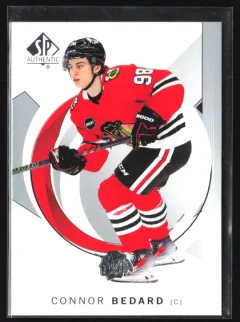
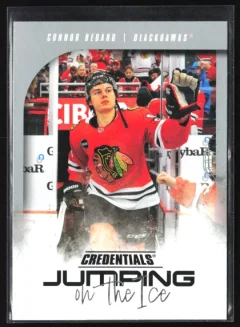
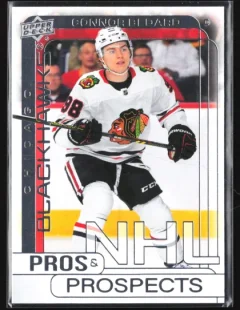
For example, to price a 2023 Upper Deck Connor Bedard Young Guns PSA 10, search: "2023 Upper Deck Young Guns Connor Bedard PSA 10" and filter by sold. You'll see recent transaction prices that reflect current market value.
2. 130point.com (Free)
130point is a free tool that aggregates eBay sold data and presents it in a clean format. It's particularly useful for seeing price trends over time. Search for any card and 130point shows you a timeline of sold prices, making it easy to spot whether a card is trending up or down.
3. PSA Price Guide (Free and Paid)
PSA maintains a price guide for graded cards that's strong for vintage and high-population modern cards. The free version provides price ranges, while the paid version offers more detailed data. PSA's population report is also valuable — it shows how many cards have been graded at each grade level, which helps assess scarcity.
4. CardLadder (Paid)
CardLadder is a subscription-based market data platform that tracks card prices across multiple marketplaces. It provides historical price charts, market indices, and portfolio tracking. For serious collectors and sellers, CardLadder is the most comprehensive pricing tool available.
5. Beckett Price Guide (Paid)
Beckett has been the traditional price guide for decades. While Beckett prices can lag behind real-time market data, they're still useful as a reference point, especially for vintage cards. Beckett also offers a population report and grading services.
6. COMC (Free)
Check Out My Cards (COMC) shows buy and sell prices on their platform. While COMC prices tend to be slightly higher than eBay (due to the platform's convenience factor), they're a useful data point for triangulating value.
7. Sports Card Investor / Market Movers (Paid)
These platforms offer market analysis, trend data, and portfolio tracking. They're most useful for investors who want to track market movements and identify emerging trends.
How to Price Raw (Ungraded) Cards
Pricing raw cards is more complex than pricing graded cards because condition is subjective. Here's the approach:
- Find raw comps only — Filter out any PSA, BGS, SGC, or other graded cards from your search results. Raw and graded comps live in completely different pools and should never be averaged together.
- Assess your card's condition — Evaluate centering, corners, edges, and surface under good lighting. Be honest — most collectors overestimate their cards' condition.
- Compare to sold comps of similar condition — Look at the photos in sold listings to find comps that match your card's condition. A raw card in "near mint" condition should be priced against similar near-mint comps, not against mint-looking comps.
- Factor in the grading premium — If your card looks like a PSA 10 candidate, it may be worth more than typical raw comps because buyers will factor in the grading upside.
- Search for the exact card + grade + grading company — "PSA 10" is not the same as "BGS 9.5" or "SGC 9." Each grader has different market premiums.
- Check the population report — A card with 500 PSA 10s will be priced differently than one with 5 PSA 10s. Lower population = higher value.
- Look at recent trends — Is the card trending up or down? A player on a hot streak will see rising prices; a slumping player will see declining prices.
- 2018 Prizm Luka Doncic RC: PSA 9 ~$800, PSA 10 ~$4,000 (5x multiplier)
- 2023 UD Bedard Young Guns: PSA 9 ~$275, PSA 10 ~$2,000+ (7x multiplier)
- Base card: The reference point. All parallel values are relative to the base.
- Unnumbered parallels (Silver Prizm, Refractor): Typically 3-10x the base card value
- /199 parallels: Typically 5-15x the base
- /99 parallels: Typically 10-25x the base
- /25 parallels: Typically 25-50x the base
- /10 parallels: Typically 50-100x the base
- /5 parallels: Typically 100-200x the base
- 1/1 parallels: No reliable comp — priced based on player popularity and buyer interest
- Condition is everything — A 1952 Topps Mickey Mantle in PSA 9 sold for $12.6 million. The same card in PSA 3 might sell for $50,000. The condition premium is even more extreme than modern cards.
- Population matters more — Vintage cards have fewer surviving high-grade examples, making population reports critical for pricing.
- Use auction results — Vintage cards often sell through auction houses (Heritage, Goldin, PWCC) rather than eBay. Check auction results for high-value vintage cards.
- Professional appraisal — For vintage cards worth $1,000+, consider a professional appraisal to establish value for insurance or sale purposes.
- eBay Sold Search — Free, real-world sales data. The #1 tool for card pricing.
- 130point.com — Free eBay sold data aggregator with price trends.
- PSA Population Report — Free to search. Shows how many cards exist at each grade.
- COMC Price History — Free to browse. Shows buy/sell prices on the COMC platform.
- Sportscardinvestor.com — Free tier with basic price tracking for popular cards.
- Research comps — Use eBay sold listings and 130point to find the median sold price for your exact card.
- Adjust for condition — If your card is raw, be honest about condition. If graded, use the graded comp directly.
- Price competitively — Set your price at or slightly below the median comp for faster sales. If you're not in a hurry, price at the median or slightly above.
- Factor in fees — Remember that platform fees will reduce your net. Price accordingly to achieve your desired net profit.
- Be willing to negotiate — Many buyers will make offers. Set your initial price with some room for negotiation.
A general rule: raw cards typically sell for 20-60% less than PSA 9 equivalents. If a PSA 9 sells for $100, the raw equivalent in similar condition might sell for $40-$80.
How to Price Graded Cards
Graded cards are easier to price because the grade is objective and documented. Here's the approach:
The PSA Premium
PSA graded cards command a premium over other grading companies. A PSA 10 typically sells for 10-25% more than a BGS 9.5 of the same card. This premium exists because PSA is the most recognized and trusted grader in the market, and PSA slabs are the most liquid.
The PSA 9 to PSA 10 Gap
The price gap between PSA 9 and PSA 10 is the single most important price dynamic for modern cards. For example:
This gap exists because the visual difference between a 9 and 10 is often invisible to the naked eye, but the price difference is enormous. Buyers at this level use magnification and specific grading knowledge to evaluate raw copies for submission.
How to Price Parallels and Numbered Cards
Parallels create an additional value layer beyond the base card. Each parallel needs its own comp set — a base /99 is not a Gold /10, and a Silver Prizm is not a Red Prizm /199. Here's how parallel pricing typically works:
These multipliers vary by player, set, and sport. A superstar's /99 might be 30x the base, while a role player's /99 might be only 5x. Always use actual sold comps rather than relying on multipliers alone.
How to Price Vintage Cards
Vintage cards (pre-1980) have different pricing dynamics than modern cards:
Free Card Pricing Tools for Canadians
How to Price Cards for Sale on Card Source Canada
When pricing cards for sale on Card Source Canada, follow these steps:
Common Pricing Mistakes to Avoid
1. Using Asking Prices Instead of Sold Prices
This is the #1 mistake. Asking prices reflect what sellers hope to get, not what buyers are willing to pay. Always use sold comps.
2. Mixing Raw and Graded Comps
Raw and graded cards are different products with different values. Never average them together. A PSA 10 is not comparable to a raw card, even if the raw card looks perfect.
3. Ignoring Parallel Differences
A Silver Prizm is not a Red Prizm /199. A Refractor is not a Gold Refractor /50. Each parallel has its own value profile. Always match the exact parallel when pulling comps.
4. Using Outdated Sales Data
A sale from 12 months ago may not reflect current value. Stick to 60-90 day sold comps for active cards, and 180 days for less frequently traded cards.
5. Not Factoring in Fees
If you sell on eBay, you lose ~13% in fees plus ~3% in payment processing. If you sell on COMC, you lose processing and cash-out fees. Always calculate your net, not your gross.
6. Overpricing "Rare" Cards
Just because a card is rare doesn't mean it's valuable. A 1/1 of a role player might sell for $20, while a base card of a superstar sells for $500. Value is driven by demand, not just scarcity.
7. Ignoring Market Trends
If a player is on a hot streak, their cards may be trending up. If they're injured or underperforming, cards may be trending down. Always check the trend direction, not just the current price.
How Often Should You Reprice?
For active inventory, check prices every 30-60 days. For long-term holds, check quarterly. If a player has a major event (trade, injury, MVP season), check immediately — prices can move dramatically within hours of news breaking.
For Canadian collectors with large collections, consider using a portfolio tracking tool like CardLadder or a simple spreadsheet to monitor values over time. This helps with insurance valuations and identifies cards that may be worth selling.
Frequently Asked Questions
How do I find out what my sports cards are worth?
Search eBay for the exact card (year, brand, set, player, parallel, grade), filter by "Sold Items," and look at the median sold price from the last 60-90 days. Use 130point.com for a free aggregate view of sold data.
Are Beckett price guides accurate in 2026?
Beckett price guides can lag behind real-time market data by weeks or months. They're useful as a reference but should not be your only pricing source. eBay sold data is more current and reflects actual transaction prices.
How much is the grading premium for sports cards?
Raw cards typically sell for 20-60% less than PSA 9 equivalents. PSA 9s sell for 30-50% less than PSA 10s. The PSA 10 premium can be 5-15x the raw value for popular rookie cards.
What's the best free tool for pricing sports cards?
eBay Sold Listings and 130point.com are the best free tools. Both show actual transaction prices. For graded cards, the PSA Population Report is also free and helps assess scarcity.
How do I price a 1/1 card with no comps?
1/1 cards have no direct comps. Price them based on the player's popularity, the card's desirability (auto, patch, low-numbered brand), and what similar 1/1s of comparable players have sold for. Be prepared for negotiation — 1/1 pricing is inherently subjective.