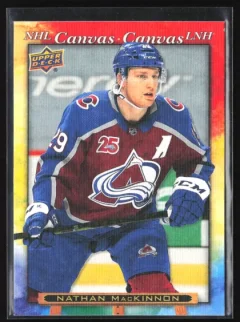
Vintage hockey cards from the 1990s and 2000s represent one of the most accessible entry points into sports card collecting, with iconic rookie cards of Hall of Famers like Jaromir Jagr, Sergei Fedorov, and Mats Sundin available in raw condition for under $20, while high-grade PSA 10 copies can command hundreds or even thousands of dollars. The 1990-91 Upper Deck Hockey set, the O-Pee-Chee brand dating back to 1933, and the insert sets from the late 90s and early 2000s form the backbone of vintage hockey card collecting in Canada. This guide provides Canadian collectors with a complete breakdown of vintage hockey card buying, from identifying valuable cards to grading, pricing, and where to buy vintage hockey cards in Canada.
What Makes a Hockey Card "Vintage"?
In the sports card hobby, "vintage" typically refers to cards produced before the modern era, with the 1990s and early 2000s representing an accessible vintage window where raw cards are affordable but high-grade examples carry significant premiums. For hockey cards specifically, the vintage landscape includes:
- Pre-1980 (True Vintage): O-Pee-Chee sets from 1933-1979, including the iconic 1979 O-Pee-Chee Wayne Gretzky rookie card. These are the most valuable vintage hockey cards, with the Gretzky OPC rookie selling for $465,000 in PSA 10.
- 1980s (Early Modern): O-Pee-Chee and Topps sets from the 1980s, including rookie cards of Mario Lemieux, Steve Yzerman, and Patrick Roy.
- 1990s (Junk Wax Era): Mass-produced but culturally significant. The 1990-91 Upper Deck Hockey set is the standout, with rookie cards of Jagr, Fedorov, Belfour, and Modano. Raw copies are affordable, but PSA 10s carry real premiums.
- 2000s (Early Premium): The transition to premium products, with rookie cards of Sidney Crosby (2005-06) and Alexander Ovechkin (2005-06) becoming the defining cards of the era.
For most Canadian collectors, the 1990s and 2000s represent the sweet spot: affordable raw cards with nostalgia value, and high-grade examples that carry meaningful investment potential.
The O-Pee-Chee Brand: Canada's Hockey Card Heritage
O-Pee-Chee is debatably the most important brand to the history of hockey cards, producing cards from 1933 to 1995 with a focus on the Canadian market that made them the gold standard of 20th century hockey card collectibles.
History of O-Pee-Chee
The O-Pee-Chee Gum Company was formed in 1911 in London, Ontario, Canada. Between 1933 and 1995, the company produced hockey cards distributed almost exclusively throughout Canada. In 1966, Topps and O-Pee-Chee came to an agreement: Topps would confine its hockey distribution to the United States, and O-Pee-Chee would remain in Canada. Topps released their cards first in every season, while O-Pee-Chee had more cards in each set.
O-Pee-Chee cards, though released in near tandem with Topps, are often the more valuable cards today on the secondary market. This is partly due to lower production runs for the Canadian market and partly due to the brand's cultural significance in Canada.
The Death of O-Pee-Chee and Brand Legacy
Changes in sports card licensing along with the sport card crash of the 1990s resulted in the company's bankruptcy in 1995. Nestle purchased the company in 1996, licensing the card brand to Topps, who continued to produce cards under the name until 2004. Upper Deck has owned the set name since 2007, and they continue to release hockey sets under the O-Pee-Chee name today.
Modern O-Pee-Chee products from Upper Deck carry the historic brand name but are produced with modern technology. The vintage O-Pee-Chee cards (pre-1995) are the true collectibles, with condition issues that make high-grade examples scarce and valuable.
Key Vintage O-Pee-Chee Sets
- 1966-67 O-Pee-Chee: The first OPC hockey set under the Topps agreement, featuring Bobby Orr rookie cards.
- 1979-80 O-Pee-Chee: The Wayne Gretzky rookie card set. The OPC Gretzky rookie is far more valuable than its Topps counterpart, with a PSA 10 selling for $465,000 in 2016.
- 1990-91 O-Pee-Chee Premier: High-end set with rookie cards of key players from the era.
1990-91 Upper Deck Hockey: The Crown Jewel of 90s Vintage
The 1990-91 Upper Deck Hockey set is a perfect blend of nostalgia, innovation, and accessible price points with real upside, featuring rookie cards of multiple Hall of Famers at affordable raw prices. At CardChasers, this era is celebrated as one of the most collectible in hockey card history.
Key Rookie Cards in 1990-91 Upper Deck
- Jaromir Jagr: The headliner. Longevity, scoring milestones, and global popularity keep his 1990-91 Upper Deck rookie near the top of any 90s hockey buy list. In PSA 10, it can command a strong premium; in PSA 9, it's a steady, liquid card that's easy to move.
- Sergei Fedorov: Stanley Cups, Selke wins, and highlight-reel speed translate to hobby respect. The Upper Deck rookie remains a core 90s buy. French copies in high grade add a layer of chase for bilingual collectors.
- Ed Belfour: Hall of Fame goaltender with a strong collector base.
- Mike Modano: First overall pick in 1988 and a Dallas Stars icon. His Upper Deck rookie has a strong collector base in Canada and the US.
- Mats Sundin: First overall pick in 1989 and a Maple Leafs icon. Sundin's Upper Deck rookie has a strong collector base in Canada. French editions do well with bilingual or team-focused collectors.
- Jeremy Roenick: Charisma and prime-era production make his rookie a steady mid-tier play that pops in high grade. A PSA 9 Roenick is often a strong value-to-liquidity card.
Pricing for 1990-91 Upper Deck Hockey
Raw copies of the top rookies are usually affordable, often under $20 for clean ungraded singles, and sometimes less if you're buying in lots. The step-up comes with grading:
- PSA 9: $25-$80 depending on player heat and timing
- PSA 10: $100-$500+ for top rookies like Jagr and Modano
Prices are fluid, but the pattern is consistent: grading magnifies value when condition justifies it. The French edition adds another layer of relative scarcity and demand, especially for collectors building dual-language runs.
Condition Issues in 1990-91 Upper Deck
While 1990-91 isn't rare (it was produced in the hobby's expansion era), scarcity is relative. High-grade examples, true gem-level copies, are far tougher than raw counts suggest:
- Gloss scuffing: The chrome-like finish shows scuffing easily.
- Centering drift: Cards can be off-center, making well-centered copies scarce.
- Tiny edge nicks: Edge wear knocks many cards into near-mint territory.
That's why gem-mint graded copies of the best rookies still command a premium. If you're handpicking raws, look hard at centering and the back edges. Gloss scuffs on the front are the silent killer.
Valuable Hockey Cards from the 1990s: What to Look For
Several factors determine whether a 1990s hockey card is valuable: player popularity, card rarity, condition, autographs and memorabilia, and set desirability.
Player Popularity
Player popularity is a primary driver of value. Cards featuring celebrated athletes like Wayne Gretzky, Mario Lemieux, and Patrick Roy command higher prices. The demand for cards featuring celebrated athletes often surpasses that of lesser-known players, directly impacting market prices.
Card Rarity
Card rarity is a pivotal determinant. Limited supply directly correlates to increased demand. Several factors contribute to rarity:
- Short-printed insert sets: The 1996-97 Select Certified Mirror Gold cards, with print runs often under 30, are a prime illustration of limited availability driving substantial value.
- Error cards: Printing errors and variations can create collectible scarcity.
- Promotional releases: Cards with restricted distribution can be valuable.
- 1997-98 Metal Universe Precious Metal Gems: Even lower-graded examples can fetch significant sums due to the combination of player appeal and print scarcity.
Condition and Grading
The physical condition of hockey cards from the 1990s exerts a significant influence on their appraised value. Cards exhibiting minimal wear and adhering to stringent standards command a substantial premium. PSA 10 copies of star rookies can be worth several times PSA 9s.
Autographs and Memorabilia
Authenticated autographs and game-used memorabilia embedded in cards can substantially increase their value. Ensure that autographs are certified by recognized authenticators like PSA/DNA or Beckett Authentication Services.
Key 1990s Hockey Card Sets to Collect
Several 1990s hockey card sets stand out as the most collectible and potentially valuable for Canadian collectors:
1990-91 Upper Deck Hockey
The standout set of the decade, featuring rookie cards of Jagr, Fedorov, Belfour, Modano, and Sundin. The French edition adds scarcity. High-grade copies of star rookies carry meaningful premiums.
1996-97 Select Certified
The Mirror Gold parallels, with print runs under 30, are among the rarest and most valuable 90s hockey cards. Even commons in Mirror Gold can command significant prices.
1997-98 Metal Universe
The Precious Metal Gems inserts are legendary, with extremely low print runs making them some of the most sought-after 90s hockey cards.
1997 Donruss Canadian Ice
A Canada-specific Donruss product with 156 tracked players, including Martin Brodeur, Patrick Roy, Eric Lindros, and Joe Sakic. The Canadian Ice set has Dominion Series and Provincial Series parallels with varying scarcity.
1990s O-Pee-Chee Sets
While O-Pee-Chee went bankrupt in 1995, their early 90s sets carry the brand's historic significance. OPC cards from this era are often more valuable than their Topps counterparts due to lower Canadian production runs.
2000s Hockey Cards: The Crosby/Ovechkin Era
The 2005-06 Upper Deck Hockey set, featuring rookie cards of both Sidney Crosby and Alexander Ovechkin, is the defining set of the 2000s and one of the most valuable modern hockey card sets ever produced.
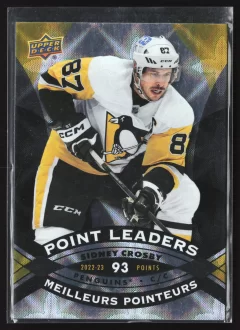
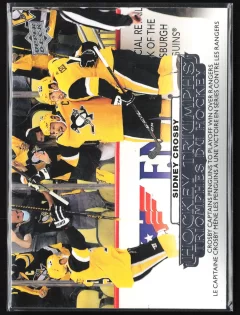
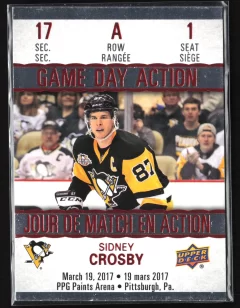
Sidney Crosby 2005-06 Upper Deck Young Guns #201
The most important Young Guns card of the modern era. Crosby's 2005-06 Young Guns RC defined NHL collecting for a generation. Values range from $200 for low-grade raw copies to $90,000+ for PSA 10. This is the card that every hockey collector aspires to own.
Alexander Ovechkin 2005-06 Upper Deck Young Guns #443
Companion to Crosby in the same year, with similar significance. Ovechkin's career production has validated his Young Guns RC as a foundational hockey asset. Values range from $150 to $40,000+ in PSA 10.
Other Key 2000s Rookie Cards
- Patrick Kane (2007-08): Young Guns rookie of the first overall pick.
- Jonathan Toews (2007-08): Young Guns rookie of the Blackhawks captain.
- Steven Stamkos (2008-09): Young Guns rookie of the first overall pick.
- John Tavares (2009-10): Young Guns rookie of the first overall pick.
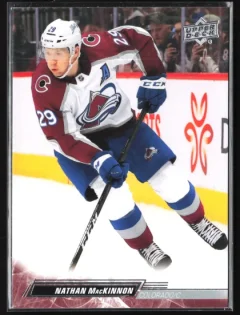
- Nathan MacKinnon (2013-14): Young Guns rookie of the first overall pick.
Grading Vintage Hockey Cards: PSA, BGS, SGC, or KSA?
For vintage hockey cards, PSA is the most liquid for resale, SGC is increasingly respected for vintage and junk-wax-to-modern crossovers, BGS has historical strength in 90s hockey, and KSA is a Canadian-domestic option.
Grading Recommendations by Era
- 1990-91 Upper Deck: PSA 9s and 10s (and strong SGC/BGS equivalents) can bring multiples of raw. PSA is most liquid. SGC 9.5s and 10s have good traction. BGS 9.5 with strong subgrades is compelling.
- 1980s O-Pee-Chee: PSA dominates. SGC is gaining respect for vintage. BGS has historical presence.
- 1970s and earlier: PSA is the standard. SGC is increasingly accepted for vintage.
Minimum Grade Targets
Aim for PSA 9/SGC 9.5/BGS 9.5 on top rookies if you're ROI-focused. If your pre-screen lands at PSA 8 or SGC 8.5, you're often better off selling raw unless it's a French copy or a particularly clean star. For 1990-91 Upper Deck specifically, PSA 10s of Jagr, Fedorov, and Modano can push into the low-to-mid hundreds, with PSA 9s commonly landing in the $25-$80 zone.
Pre-Grading Inspection
Nothing beats seeing the card under proper light. Key things to check:
- Gloss: Look for scuffing under direct light.
- Edges: Check for whitening on dark borders.
- Centering: Measure border ratios on both sides.
- Corners: Examine under magnification for fraying.
- Surface: Look for print lines, scratches, and dimples.
If you're near Montreal, CardChasers in Laval curates 90s hockey singles and can provide in-person inspection. For online buyers, Card Source Canada provides detailed photos and condition descriptions.
Where to Buy Vintage Hockey Cards in Canada
The best places to buy vintage hockey cards in Canada are dedicated Canadian card retailers like Card Source Canada, local card shows, and reputable Canadian card shops with online presence.
Card Source Canada
Card Source Canada offers vintage hockey cards with CAD pricing, domestic shipping starting at $1.50, and free shipping on 5+ card orders. Advantages for vintage collectors:
- Single-card focus: Buy exactly the vintage cards you want.
- CAD pricing: No exchange rate surprises.
- Best-offer capability: Negotiate prices on vintage cards.
- Domestic shipping: No customs delays for vintage cards crossing the border.
Local Card Shows and Shops
Local shows and reputable shops let you inspect gloss, edges, and centering, and negotiate face to face. For vintage cards, in-person inspection is invaluable. Major Canadian card shows include:
- Toronto Sports Card Expo: The largest sports card show in Canada, held multiple times per year.
- Montreal card shows: Regular shows with strong vintage hockey presence.
- Local card shops: Many Canadian cities have card shops with vintage inventory.
eBay and Online Marketplaces
eBay is the largest marketplace for vintage hockey cards, but Canadian buyers should factor in exchange rates, shipping costs, and customs delays. For vintage cards, eBay is best used for graded cards from reputable sellers with 99%+ feedback, where condition is already certified by a grading company.
Building a Vintage Hockey Card Collection: Strategy Guide
Building a vintage hockey card collection requires a different approach than modern card collecting, with emphasis on condition, authenticity, and long-term value preservation.
Strategy 1: Rookie Card Focus
Focus on rookie cards of Hall of Fame players. The 1990-91 Upper Deck set offers the best value, with affordable raw copies of Jagr, Fedorov, Belfour, and Modano. For higher budgets, target 2005-06 Upper Deck Crosby and Ovechkin Young Guns.
Strategy 2: Set Completion
Complete a full set from a specific year. The 1990-91 Upper Deck set is the most popular 90s set to complete, with most cards available at affordable prices. The challenge is finding high-grade copies of the star rookies.
Strategy 3: French Edition / Bilingual Collection
For Canadian collectors, building a bilingual run of 1990-91 Upper Deck cards (both English and French editions) is a unique collecting angle. French copies in high grade add a layer of chase, especially for collectors assembling dual-language runs of star rookies.
Strategy 4: Insert Set Focus
Target specific insert sets from the 90s, like 1996-97 Select Certified Mirror Gold or 1997-98 Metal Universe Precious Metal Gems. These are rare, valuable, and have dedicated collector bases.
Strategy 5: Decade Run
Build a collection with one great card from every year, starting from the 1990s. This approach provides historical perspective and ensures variety in your collection.
Protecting and Storing Vintage Hockey Cards
Vintage hockey cards require proper storage to maintain condition and value, with Canadian climate considerations adding importance to humidity and temperature control.
- Penny sleeves: Every card should be in a penny sleeve.
- Top loaders or card savers: Use rigid holders for all vintage cards.
- Team bags: Seal top loaders in team bags to prevent dust and moisture.
- Storage boxes: Use acid-free storage boxes designed for cards.
- Climate control: Canadian climate extremes (dry winters, humid summers) can damage cards. Store in a climate-controlled environment with 35-45% humidity and 65-70°F temperature.
- UV protection: Keep cards away from direct sunlight to prevent fading.
- Graded cards: For high-value vintage cards, grading provides both authentication and protection in a sealed slab.
Frequently Asked Questions
Are 1990s hockey cards worth anything?
Many 1990s hockey cards are worth money, particularly rookie cards of Hall of Fame players in high grade. While raw copies are often affordable (under $20), PSA 10 copies of stars like Jagr, Fedorov, and Modano can sell for $100-$500+. Rare insert sets like 1996-97 Select Certified Mirror Gold and 1997-98 Metal Universe Precious Metal Gems can be worth thousands.
What are the most valuable vintage hockey cards?
The most valuable vintage hockey card is the 1979-80 O-Pee-Chee Wayne Gretzky rookie card, with a PSA 10 selling for $465,000. Other valuable vintage cards include the 2005-06 Upper Deck Young Guns of Sidney Crosby ($200-$90,000) and Alexander Ovechkin ($150-$40,000), and the 1990-91 Upper Deck rookie cards of Jagr and Modano in PSA 10.
Where can I buy vintage hockey cards in Canada?
Canadian collectors can buy vintage hockey cards at Card Source Canada (cardsource.ca), which offers vintage singles with CAD pricing and domestic shipping starting at $1.50. Other options include local card shows (Toronto Sports Card Expo, Montreal card shows), local card shops, and eBay for graded cards from reputable sellers.
Should I grade my vintage hockey cards?
Yes, you should grade vintage hockey cards that are in near-mint or better condition, especially rookie cards of star players. The PSA 10 premium for vintage cards is significant, and grading provides authentication and protection. For 1990-91 Upper Deck, PSA 9s and 10s can bring multiples of raw prices. Pre-screen for centering, gloss scuffing, and edge wear before submitting.
What is the difference between O-Pee-Chee and Topps vintage hockey cards?
O-Pee-Chee was a Canadian company based in London, Ontario that produced hockey cards primarily for the Canadian market from 1933-1995. Topps produced hockey cards for the US market. Under a 1966 agreement, Topps confined hockey distribution to the US while O-Pee-Chee remained in Canada. O-Pee-Chee cards are often more valuable than their Topps counterparts due to lower production runs and Canadian cultural significance.
What is the 1990-91 Upper Deck Hockey set worth?
The 1990-91 Upper Deck Hockey set is one of the most collected 90s hockey sets. Raw copies of star rookies (Jagr, Fedorov, Modano) are typically under $20. PSA 9s range from $25-$80, and PSA 10s can reach $100-$500+ depending on the player. The French edition carries additional scarcity and value for bilingual collectors.
Start Your Vintage Hockey Card Collection Today
Whether you are chasing a 1990-91 Upper Deck Jagr rookie in PSA 10 or building a complete vintage set, Card Source Canada has the inventory, pricing, and shipping rates to support your collection. Browse our hockey card inventory to find vintage singles from O-Pee-Chee, Upper Deck, and more, all with Canada's cheapest card shipping rates.